All posts · Growth
Connected POS for UK restaurants: reduce order handoffs
A shared system for QR, counter and till orders can reduce re-keying between ordering and preparation. Clear menus, team training and checks at the pass still matter. Here is how to review the handoffs in your own service.
By Amaan Tanveer, Co-founder · · 5 min read
An order may be taken on one device, copied into another, called across a pass and reconciled at the till. Each change of medium creates an opportunity for a modifier to be missed or a table reference to be confused. Look at the process as well as the individual mistake.
Where errors actually come from
Watch how information moves during a busy service. Check the gaps between taking an order, preparing it and handing it over, then record where a detail changes or needs repeating. Kitchen practice, menu setup and training all deserve attention.
- Re-keying an order from a notepad into the till
- A modifier that never made it onto the ticket
- Two staff unsure which order belongs to which table
- Delivery orders living in a separate tablet entirely
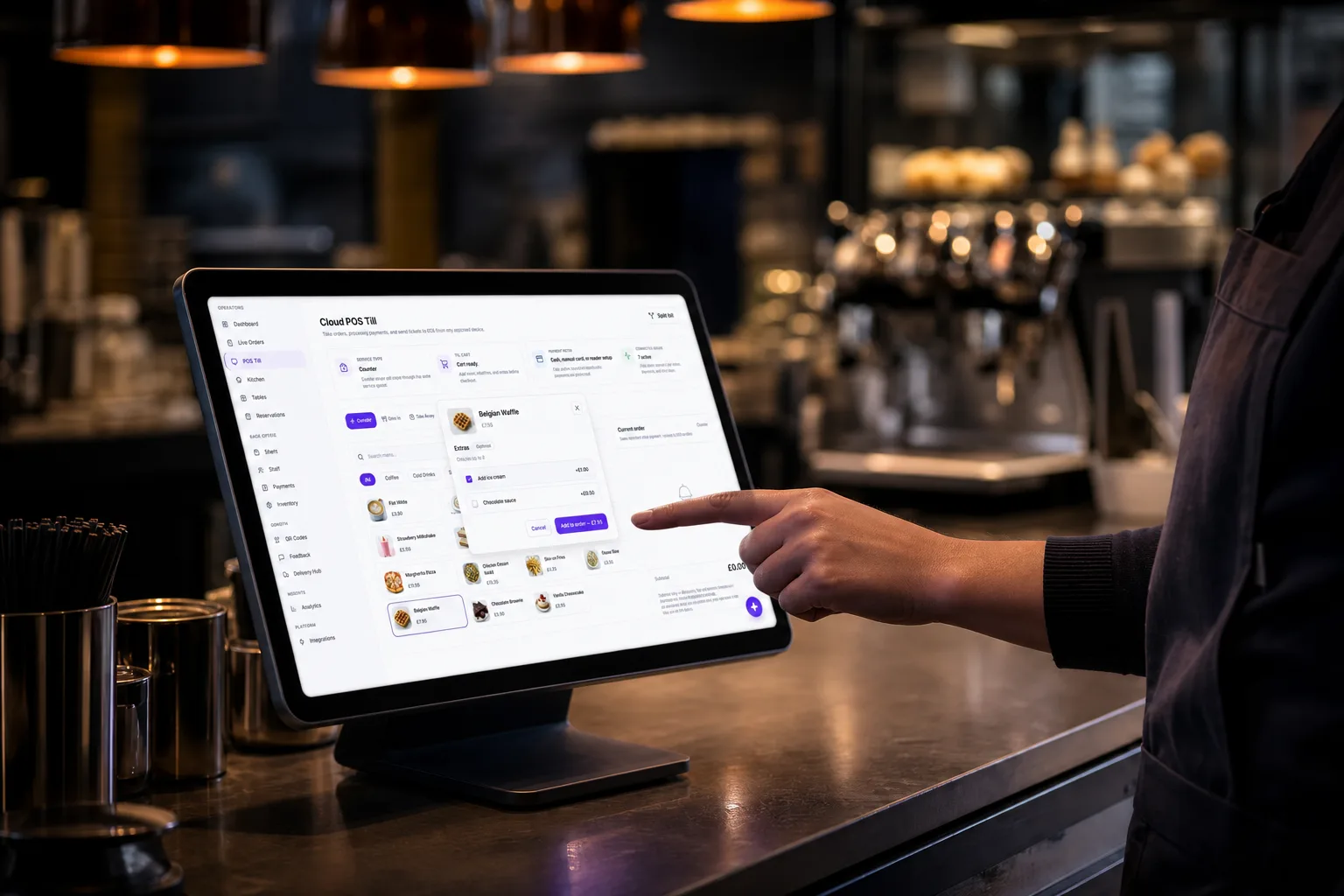
Reduce re-keying between till and kitchen
Servio lets QR, counter and till orders enter the same system and reach the kitchen display, with modifiers and notes recorded with the order. Single-station KDS is included on every plan; multi-station routing is included on Growth and Enterprise or available on Starter for £35/month excluding VAT. Test your menu and routing before service rather than assuming the shared system prevents every error.
Keep modifiers and notes with the ticket, and confirm them at preparation. A shared screen supports the team’s checks; it does not replace them.
Make fewer handoffs a repeatable habit
Reducing repeated entry can leave more time for preparation and guest service. Use the POS workflow to keep order details consistent, then track remakes and service delays to see whether the change helps your venue.
A worked example of the cost of order errors
For illustration, suppose a venue serves 400 plates a week and records an error on 2% of them: eight dishes. If the venue estimates £10-£15 per error for ingredients, labour and any compensation, that is £80-£120 a week, or £4,160-£6,240 over 52 weeks. These are assumptions, not observed customer results or promised savings. Use your own remake costs and refund records to estimate the effect.
Training and system design work together. Agree modifier names, confirm special requests and give staff a clear way to flag uncertainty. Reducing repeated entry can help, but it cannot correct an inaccurate menu or replace operator checks on ingredients and allergens.
Audit your own seams in one service
During one busy shift, count each time an order changes medium: voice to paper, paper to till, till to another instruction or delivery tablet to kitchen. Record where a detail needs clarification. Then decide which handoffs can be removed, and compare errors across similar services before and after the change.
Servio brings a QR order, counter order or floor order into the same ordering system and kitchen display. Verify modifiers, notes and station assignments using practice orders; plan multi-station responsibilities with our routing guide. A previously loaded POS can retain pending cash or external-card orders on that device and sync when connectivity returns. Integrated Stripe Terminal payments cannot be queued offline; QR ordering, cloud updates and reporting require a connection.
What to check during your first week
Plan a review of the first services on the new workflow. Ask the kitchen which tickets needed clarification, check whether staff used the agreed modifier names and record any missed or duplicate orders. Keep checking until the team understands the process; there is no fixed week-one result to assume.
If remakes or delays fall, look for the reason before attributing it to the POS. Staffing, menu changes and the service mix can affect the same measures. Use comparable shifts and guest feedback to decide which changes to keep.
Bring delivery orders into the operating plan
External delivery tablets create another handoff to manage. Growth includes manual delivery management; this does not imply a live Deliveroo, Uber Eats or Just Eat integration. When staff enter an external order, check the reference, items and modifiers against the original. Give the kitchen visibility of the work and make responsibility for checking clear.
Keep a tally over comparable services: remakes, incorrect orders, refunds and the reason for each. Estimate costs from your actual ingredient and labour figures instead of a standard allowance. Review patterns with the team and choose one change to test, then measure it again.
Questions
Where can restaurant order errors occur?
Errors can arise when orders are copied between systems, modifier names are unclear, table references are confused or requests are passed verbally. Review menu setup, training and preparation checks alongside the handoffs.
Can a connected POS help reduce mistakes?
A shared ordering and kitchen workflow can reduce repeated entry. Test that modifiers and notes appear correctly, and keep preparation checks in place. Allergen information must be verified by the operator; software does not guarantee safe preparation or legal compliance.
Is this only for large restaurants?
No. A small venue can review repeated entry and unclear responsibilities too. Start with the service you actually run; a single-station kitchen display may be sufficient before adding more stations.